
Menopause Wellness & Aesthetic Treatments: Helping Women

Menopause is finally getting the attention it deserves, and that's a good thing. Women are talking more openly about their symptoms, their experiences and the impact hormonal changes can have on their everyday lives.
And there are plenty of things that can help, from nutrition, exercise and HRT to skincare, aesthetic technology and wellness treatments.
But alongside this growing awareness, something else is happening.
Menopause is becoming big business.
And I do wonder whether some businesses are seeing the women who need help or simply the financial opportunity menopause represents.
I've bought plenty of things myself hoping they'd help. Some have, some haven't, and I'm sure I'm not alone!
There's absolutely nothing wrong with wanting to look and feel our best, or with businesses offering products and services that genuinely help. But how do we know what's actually worth spending our money on?
Menopause shouldn't just be seen as a commercial opportunity. It should be an opportunity to better understand women, what we're going through and how we can genuinely help.
So let's look at what your customers may be experiencing during perimenopause and menopause, why these changes happen and how salons, aesthetic clinics, gyms and wellness businesses can respond with appropriate advice, treatments and technology.

Understanding Menopause: What Your Customers Are Experiencing and How You Can Help
For businesses working in beauty, aesthetics, fitness and wellness, understanding menopause is becoming increasingly important.
Women may be coming to you with concerns about their skin, hair, body shape, muscle tone or general wellbeing, without necessarily connecting those changes to perimenopause or menopause.
Some of these changes can feel as though they've happened almost overnight. Skin becomes drier, hair may start thinning, weight settles in places it never used to, and maintaining muscle tone can become harder. Poor sleep, aching joints, fatigue and changes in mood can add to the frustration.
It's no wonder women are looking for answers.
As practitioners, understanding why these changes happen can help you ask better questions, adapt treatments and recommend services that genuinely meet your customers' needs.
And the good news is that many businesses already have treatments or technology that may help with some of these concerns.
The opportunity is to understand what your customers need before deciding what to sell them.
Skin: When Moisturiser Doesn't Seem to Touch the Sides
One of the changes your customers may experience during menopause is increasingly dry, sensitive or less elastic skin.
Having experienced menopause from quite an early age myself, I know just how dry our skin can become. Sometimes you feel as though you could file your nails on it!
As oestrogen declines, skin can lose some of its ability to retain moisture. Collagen levels and elasticity also change, leaving skin feeling thinner, drier, less supple and sometimes more sensitive.
And it isn't just faces. Skin across the body can become drier and more sensitive too.
How can your business help?
Good skincare is the starting point. Gentle cleansing, effective moisturisers, ingredients that support the skin barrier and daily sun protection can make a real difference.
For women needing more help with skin texture, hydration or firmness, technology has a place.
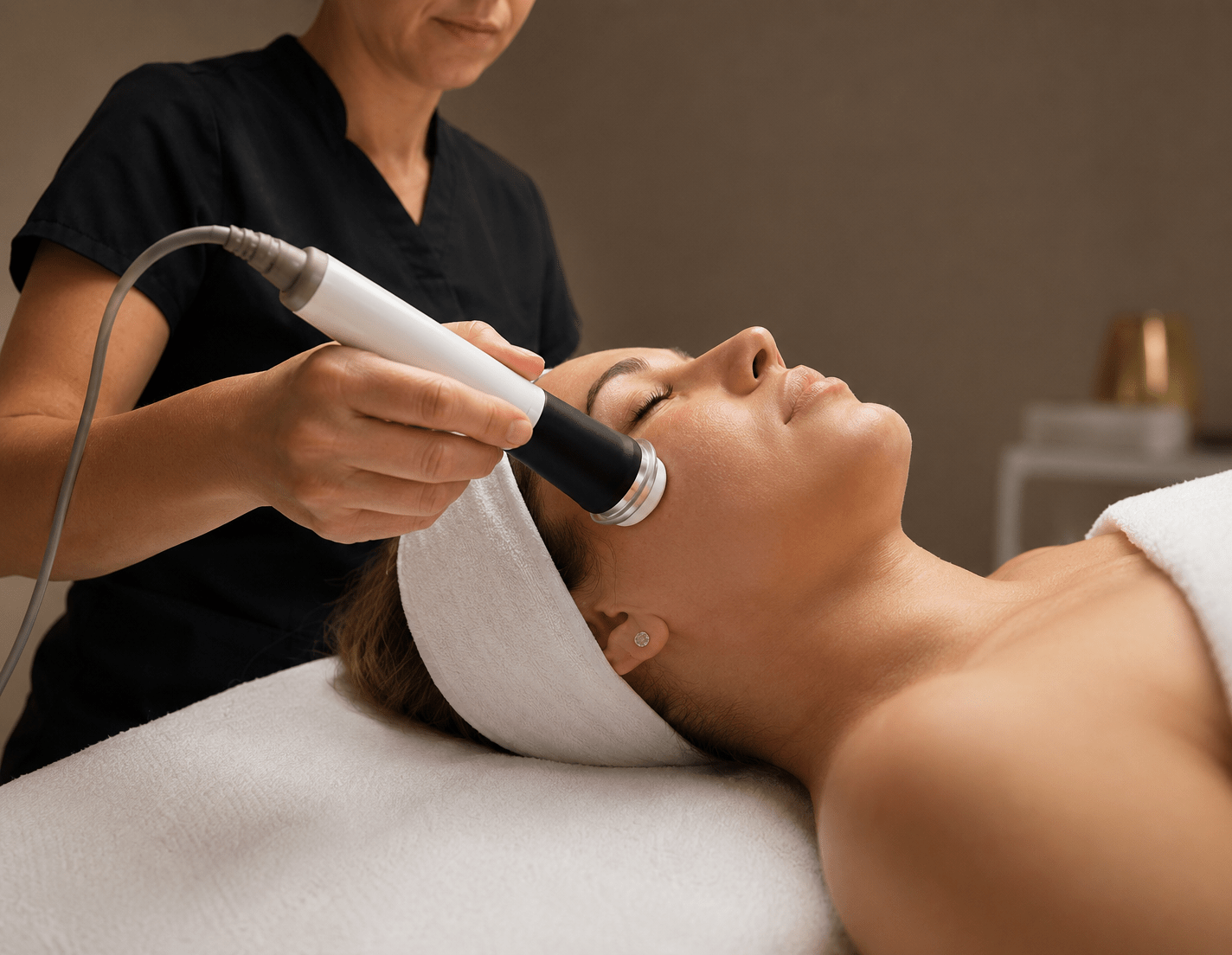
WA HydraLift offers hydration-focused facial treatments alongside exfoliation and other technologies that can help address concerns such as fine lines and wrinkles, depending on individual skin needs.
WA FACE combines high-intensity facial muscle stimulation with radiofrequency to help address concerns about facial firmness, muscle tone and appearance.
DERMALIGHT LED can complement skincare and aesthetic treatment programmes, with benefits depending on the wavelengths, protocols and concerns being treated.
These technologies won't replace oestrogen or reverse menopause, but they may help address some of the visible changes women are experiencing.
The important thing is recommending the right treatment for the customer's skin, goals and budget, rather than simply selling the highest-priced service.
Menopause Hydration, Muscle Loss and Body Shape: What's Happening to Our Bodies?
We've talked about how dry our skin can become, but changes happen inside bodies too.
As we age, our bodies generally contain less water, partly because we tend to lose muscle and gain a higher proportion of body fat. For women, declining oestrogen can also affect fluid regulation. Muscle is around 75% water, considerably more than body fat.
And during menopause, changes in oestrogen, ageing and lifestyle can also influence where fat is stored, particularly around the abdomen, while maintaining muscle mass and tone can become harder.
This doesn't mean menopausal women are necessarily dehydrated, but it does highlight the importance of maintaining muscle and supporting overall physical health.
Maintaining muscle isn't just about appearance. It matters for strength, mobility, body composition and long-term wellbeing.
How can your business help?
Resistance training, adequate protein, a balanced diet and regular physical activity remain important for maintaining muscle. Gyms and fitness professionals can help women develop suitable exercise programmes, while appropriately qualified nutrition professionals can provide more individualised dietary advice.
For spas, clinics, salons and wellness businesses, WA Body offers an additional option for customers concerned about muscle tone and body contour.
WA BODY uses high-intensity electromagnetic muscle stimulation to produce thousands of powerful muscle contractions during treatment, offering a non-invasive approach to conditioning targeted muscles and improving body contour.
For suitable customers noticing changes to abdominal tone or body shape, WA BODY may complement their existing exercise and nutrition routines.
It isn't a replacement for resistance training, doesn't reverse hormonal changes and isn't a proven treatment for menopause-related muscle loss. Its role is in addressing specific aesthetic and muscle-conditioning goals.
Sleep, Stress and Feeling Like Ourselves Again
Sleep disruption, fatigue, brain fog and changes in mood are among the concerns women may experience during perimenopause and menopause.
Hormonal fluctuations, night sweats and disrupted sleep can all contribute, sometimes leaving women feeling exhausted or struggling to switch off.
For spas, health clubs and wellness businesses, understanding these challenges can help you develop experiences that give customers time to relax, recharge and focus on themselves.
This is where I think the wider wellness industry can offer something valuable, provided we're realistic about what that something is.
How can your business help?
There's an opportunity for spas, gyms and wellness facilities to create welcoming spaces and offer relaxation and recovery experiences that customers genuinely value.
But businesses shouldn't need to promise hormonal balance, improved sleep or relief from menopause symptoms to make these experiences attractive.
ENSO FLOAT offers a peaceful, low-stimulation environment where people can disconnect from everyday distractions and enjoy time dedicated to relaxation.
For women who feel constantly overwhelmed or struggle to find time for themselves, that experience may be particularly appealing.
ENSO ICE offers a very different experience through controlled cold immersion, encouraging attention to breathing and being present in the moment.
Some women enjoy the sense of alertness and mental focus associated with cold-water immersion.
ENSO RED uses red and near-infrared light technology, also known as photobiomodulation, which is being researched for applications involving skin, tissue function and recovery.
These technologies can form part of a wider approach to personal wellbeing, although none is an established treatment for menopause symptoms. Cold immersion also requires appropriate screening and isn't suitable for everyone.
That might mean offering a float session, a suitable cold immersion experience, red light therapy or simply somewhere quiet to relax away from everyday pressures.
Relaxation is a worthwhile service in its own right. Providing an enjoyable experience that customers genuinely value is a much better foundation for repeat bookings than making promises the technology can't deliver.
When sleep or mental health symptoms are having a significant impact, women also deserve access to appropriate healthcare and evidence-based support.
Sometimes what we need is medical help. Sometimes it's exercise, better nutrition or a chance to relax. And sometimes it's a combination of things.
The important part is knowing the difference.
Helping Practitioners Stay on the Right Side of the Menopause Industry
Understanding what women are experiencing is one thing. Knowing how to respond appropriately as a business is just as important.
As menopause awareness grows, practitioners may see increasing interest in skin, body and wellness treatments. And that's a positive opportunity, provided the services being offered genuinely meet customer needs.
Practitioners need to understand how menopause can affect the skin, body and wellbeing, which treatments may help and where their limitations lie.
That means having the right training, carrying out appropriate consultations, recognising when medical advice is needed and being honest about the results customers can realistically expect.
At Wellness & Aesthetics Technology, we believe in educating and supporting practitioners, so they understand the technology they're using, its benefits and its limitations. This helps them recommend suitable treatments with confidence, build customer trust and develop profitable services for the right reasons.
-
By understanding common menopause-related skin and body changes, adapting consultations and recommending treatments according to individual concerns, suitability and realistic expectations. Practitioners should also recognise when medical advice is needed.
-
Treatments such as WA HydraLift, WA FACE, and WA DERMALIGHT LED therapy, may help with specific skin concerns, depending on individual suitability. They do not treat menopause itself.
-
WA BODY uses high-intensity electromagnetic muscle stimulation to produce repeated muscle contractions and is used for non-invasive muscle conditioning and body contouring. It may complement an active lifestyle but is not a replacement for resistance training or a proven treatment for menopause-related muscle loss.
-
Float therapy may offer a relaxing experience, while some people enjoy cold immersion for its sense of alertness and mental focus. Neither is an established treatment for menopause symptoms, and suitability should be considered individually.
-
Not necessarily. Many existing skin, body and wellness services may already be relevant. The priority should be understanding customer needs and ensuring any additional treatments offer genuine value rather than simply creating a menopause-branded treatment menu.

Final Thoughts
There's absolutely nothing wrong with businesses recognising changing customer needs and developing services around them. We're all running businesses, and profitability matters.
But making money should be the result of providing something worthwhile, not the reason for convincing someone they need it.
For some women, that might mean improving their skin, addressing changes to their body or feeling more confident in their appearance. For others, it might mean finding somewhere to relax and switch off, developing a better exercise routine or getting the medical advice they've needed for years.
And for many, it will be a combination.
The opportunity for our industry is to listen, understand and respond with appropriate services, supported by good education and honest advice.
At Wellness & Aesthetics Technology, we believe technology has a positive role to play in helping women look and feel their best. But it should be recommended because it genuinely meets someone's needs, not simply because menopause has become a commercial opportunity.
Menopause is a new chapter in a woman's life, not a list of problems that need fixing. If our industry can help women feel informed, supported and confident while building successful businesses, surely that's an opportunity worth getting right.
